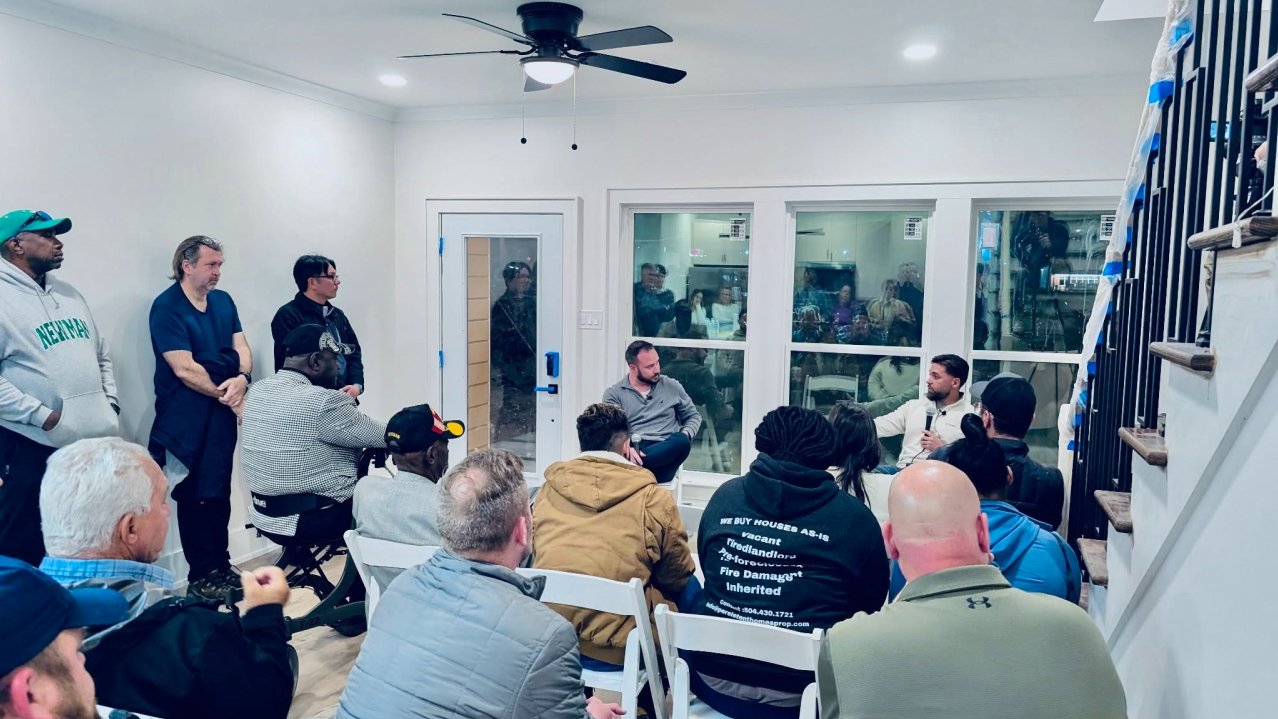
I’ve worked with hundreds of real estate investors over the years, whether interviewing them at the St. Bernard Parish Real Estate Investor Meetup, working with them as a broker, alongside them as an investor myself, or managing rentals for them as a property manager.
And after years of being around investors big and small, I’ve noticed a theme.
Most people only see the surface-level activities of real estate investing: closing on a new property, a cash-out refinance, collecting rent, raising private money, flipping houses. You know, the stuff we see on social media and YouTube.
I heard a quote from Mohnish Pabrai the other day on a podcast (I’m paraphrasing): “We only see the whale when it surfaces, but the whale is swimming all the time.”
This is unbelievably accurate for real estate investing. We all know the saying “you make money when you buy.” I think that’s directionally accurate, but it lacks a lot of depth and context. Successful investors spend countless hours working under the surface that never get seen. The closing table is the output, not the input.
So it got me thinking: what are the activities that actually drive growth and build wealth for investors?
1. They build relationships
If you’re waiting for a home-run deal to come from a Zillow alert or MLS auto-email, I wouldn’t hold your breath. It’s not impossible, but it’s not exactly probable. Successful investors spend time talking with agents, lenders, contractors, title companies, wholesalers, property managers and other investors. Tell people who you are, what you’re looking for and, most importantly, what value you can bring them. Your best deals will come from your network.
2. They analyze a lot of deals
Most of which they’ll never buy. In fact, they spend far more time studying deals they never close on than celebrating the ones they do. Gary Vaynerchuk is famous (at least to me) for “macro patience, micro hustle”: put in a ton of work in the short term and don’t expect results overnight.
You might analyze 100 deals and 99 are turds, but if one is a home run, it’s worth it. Just don’t quit after number 97, or settle for a bad deal at number 92 because you’re impatient. Every deal you analyze is a chance to understand your market better. Through that lens, it’s never wasted time.
3. They never stop learning
Almost every successful investor I know is constantly learning: books, podcasts, YouTube, networking with other investors. They’re relentlessly curious and never “reach the summit.” In fact, the closer they get, the more they realize how far they have to go. It’s beginners who think they have it all figured out. If you haven’t heard of the Dunning-Kruger effect, it’s worth looking up.
4. They take hundreds of shots
I’m in a real estate mastermind group, and one of the other investors recently said something that stuck with me: “We’ve reached out to them dozens of times, and they haven’t said ‘leave me alone’ yet, so we’re going to keep trying.”
Most people stop after one phone call or hearing “no” one time. The successful investors I know are relentless. Not annoying or pushy, but relentless. They know the difference between “no” and “stop calling me.”
The work under the surface
Everyone sees the whale when it breaches the surface and shouts “just closed another deal” out of its blowhole. No one sees it swimming under the surface analyzing deals, making connections and taking shots, but that’s where long-term success in real estate is actually built.
Want to talk through a deal or your plans in St. Bernard Parish? Call Arpent Realty at 504-356-3897, or see how we work with real estate investors.
Common questions
Where do real estate investors find their best deals?
Usually through relationships, not online alerts. Agents, lenders, contractors, title companies, wholesalers, property managers and other investors bring the best deals to people they know and trust.
How many deals should a new investor analyze?
A lot. Many investors analyze dozens or even a hundred deals for every one they buy. Each one teaches you more about your market, so the time is never wasted.
This post first appeared on LinkedIn on June 8, 2026.