
Interview recorded October 2026.
Key takeaways
- Port NOLA projects the Louisiana International Terminal will start receiving vessels at the end of 2031 or early 2032, with larger construction starting in 2027.
- The GNO, Inc. study projects 4,339 jobs supported in St. Bernard Parish and about $33.3 million a year in new tax revenue at full buildout.
- Metro New Orleans warehouse space is about 97 to 98 percent occupied, and the port projects a need for 10 to 15 million more square feet.
- Kyle Gilmore warned that other parishes are already preparing sites, so St. Bernard landowners and businesses should start planning now.
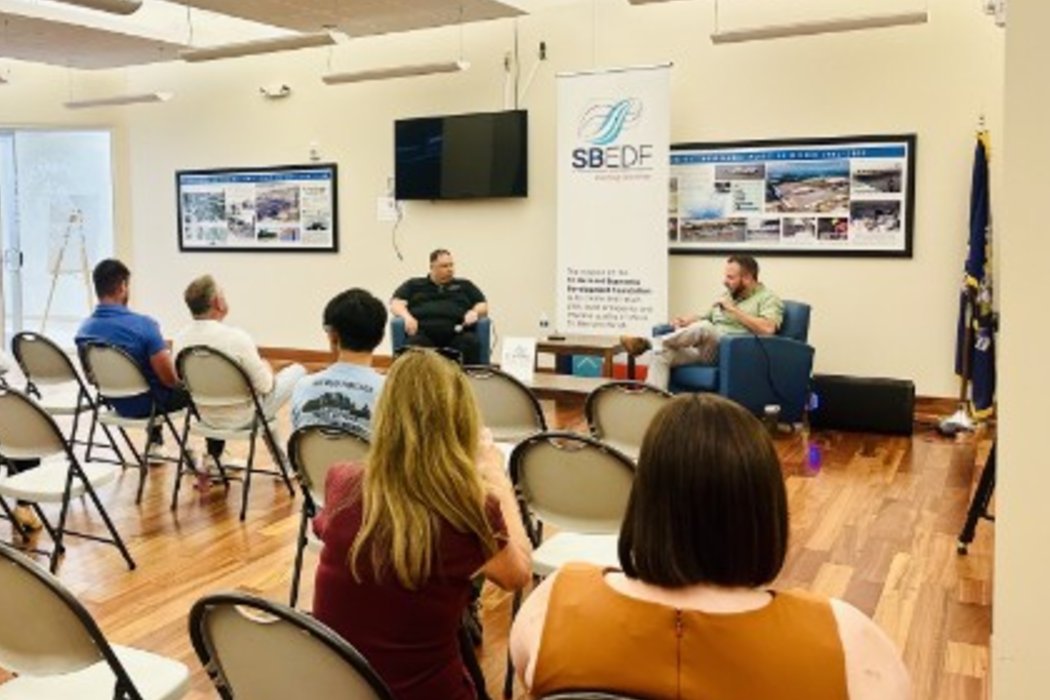
The Louisiana International Terminal is expected to start receiving vessels at the end of 2031 or early 2032, but St. Bernard’s window to prepare is open right now. That was the clearest message from our October 28 meetup.
I sat down with Kyle Gilmore, Director of Industrial and Marine Terminal Real Estate for the Port of New Orleans, at the St. Bernard Port building in Chalmette. Port NOLA President and CEO Beth Branch and Government and Community Affairs Manager Kylie Mills were there too, and both helped answer questions from the room.
Where does the Louisiana International Terminal project stand?
The port received its Army Corps of Engineers permit in August after about five years. Kyle expects the first visible work to be demolition in the old St. Bernard Port area, between East St. Bernard Highway and the river.
Larger construction should follow in 2027. Crews will clear about 450 acres between East St. Bernard Highway and Judge Perez Drive, then bring in sand to compress the ground. That sand will sit for roughly 12 to 18 months, so expect a burst of activity, then a quieter stretch on that part of the site.
Multiple lawsuits have been filed against various parties in relation to the development, but work towards the project continues at this time.
How many jobs and how much tax revenue could the terminal bring?
The GNO, Inc. economic impact study projects 4,339 jobs supported in St. Bernard Parish and about $33.3 million a year in new tax revenue at full buildout, with 635 jobs in the initial phase. The larger numbers are long-term projections, not opening-day numbers.
Kyle said port terminal jobs average about $81,000 a year. A Port NOLA presentation compares that to a local average of $55,130. He also said the International Longshoremen’s Association is looking for workers now, so people do not have to wait for the new terminal to get started in the industry.
The question I hear most is whether those jobs will be local. Some may transfer at first. But as the workforce grows and older workers retire, those openings can go to the next generation here. Nunez Community College is already preparing people for that work, and the port is partnering with it.
What does the terminal mean for St. Bernard housing?
Kyle expects long-term housing demand as jobs fill and young people stay here instead of leaving for Houston or Atlanta. He also made a point I think every homeowner should hear: from what he has seen, it usually isn’t the project that moves home values. It’s the community’s reaction to it.
Here is my own take as an investor. Quality of life and home values are two different things, and they do not always move together. People closest to a project may feel real impacts while the wider market benefits from new demand.
I would also be careful with the construction boom story. Plaquemines saw a big run-up during its LNG build, and some investors leaned too far forward when construction ended. Kyle expects this project to take fewer construction workers and sustain more jobs over a longer period, and its phased build should smooth the swings. Plan for steady long-term demand, not a quick spike.
For a deeper look, read my LIT and Residential Property Values study. Kyle also pointed me to a July 2026 analysis by Matthew Remondet, a Tulane real estate development graduate. Using a national ratio of about one new housing unit for every 2.6 jobs, Remondet estimated that 4,339 parish jobs could imply about 1,600 units of housing demand. He notes that this is illustrative math, not a formal housing needs study, and those jobs are projected at full buildout, so that demand would build over time.
Is there demand for warehouses and commercial space?
Kyle said the New Orleans metro has about 58 million square feet of warehouse space, and it is roughly 97 to 98 percent occupied. The port projects a need for another 10 to 15 million square feet once the terminal is running.
This is not only for big developers. Kyle said smaller warehouses, light manufacturing, food repackaging and equipment rental all have a place. Customs brokers and logistics firms may only need a small office with a few desks.
The port also owns about 350 acres on the other side of Judge Perez Drive, known as the backlands. The port has not decided how that land will be developed, and Kyle cautioned that only part of it may be usable.
Distance matters too. An attendee asked whether warehouses would be too close to the port to make sense. Beth Branch said being close cuts costs, and pointed to how warehouse demand grew around the Port of Savannah.
What 12 business opportunities could grow around the terminal?
Ahead of the meetup, Kyle shared this list of value-added services that could grow around the terminal, on top of the need for housing and retail.
| # | Opportunity | Who it could serve |
|---|---|---|
| 1 | Logistics and distribution | 3PLs, freight forwarders, retailers, manufacturers, e-commerce |
| 2 | Empty container depot, repair and cleaning | Shipping lines, container lessors, depot operators |
| 3 | Intermodal and inland connections | Rail, barge and trucking companies |
| 4 | Container stuffing, stripping and cargo services | Forwarders, importers, exporters |
| 5 | Refrigerated and cold-chain logistics | Food importers, seafood distributors, pharmaceutical logistics |
| 6 | Trucking, chassis and equipment service | Fleets, equipment rental, maintenance, tire and parts suppliers |
| 7 | Digital logistics platforms | Port technology firms, customs brokers, transport operators |
| 8 | Bonded warehouses and trade logistics | Customs brokers, importers, exporters, commodity traders |
| 9 | Energy and charging infrastructure | Energy service companies, charging operators, fleets |
| 10 | Marine supply and vessel services | Ship chandlers, equipment suppliers, waste contractors |
| 11 | Cargo inspection, testing and certification | Surveyors, testing labs, inspection companies |
| 12 | Port-adjacent industrial real estate | Distribution, packaging and light manufacturing businesses |
What could hold St. Bernard back?
Kyle’s warning was simple: other parishes are already getting ready. St. Tammany has a cleared business park with utilities in place, and New Orleans is working on land assembly and zoning.
Developers want shovel-ready sites with as little red tape as possible. If you own land, start learning about its zoning, permitting and utilities now. Louisiana Economic Development’s Fast Sites program is a good place to begin, and Rhett Pritchard at the St. Bernard Economic Development Foundation can walk you through it. Our recap with GNO, Inc.’s Josh Tatum goes deeper on what makes a site competitive.
Where should you start?
- Looking for a job: Contact the International Longshoremen’s Association or Nunez Community College.
- Want to work on the project: Ask Kylie Mills at the port about contractor opportunities.
- Want to serve port businesses: Find the tenant list in the real estate section of portnola.com.
- Own land: Contact Rhett Pritchard about Fast Sites.
- Want to learn more: Visit the port’s Community Connection Office in Violet.
- Buying, selling or investing locally: Call Arpent Realty at 504-356-3897 or learn about investing in St. Bernard Parish.
Frequently asked questions
When will the Louisiana International Terminal open?
Kyle Gilmore said the port projects receiving vessels at the end of 2031 or early 2032.
How many jobs will the Louisiana International Terminal bring to St. Bernard Parish?
The GNO, Inc. study projects 4,339 jobs supported in the parish at full buildout, with 635 in the initial phase.
Will the terminal create opportunities for small businesses?
Yes. Likely needs include truck service, equipment rental, vessel supply, inspection services and small office or warehouse space.
How much housing demand could the terminal create?
A July 2026 analysis by Tulane graduate Matthew Remondet estimated about 1,600 units of parish housing demand at full buildout, as illustrative math rather than a formal housing study.
Is the Louisiana International Terminal project final?
The federal permit has been issued. Multiple lawsuits have been filed in relation to the development, but work towards the project continues.
Thank you to the St. Bernard Economic Development Foundation for partnering with us on this meetup. Join the St Bernard Parish Real Estate Investors Facebook group for upcoming events, and watch past interviews on YouTube.
Port figures are projections and may change. This recap is for general information and is not investment advice.