
Most people who flip houses in New Orleans live here. Dominique Gunderson doesn’t. She grew up in the Los Angeles area, and she has flipped more than 100 properties in the New Orleans area while living somewhere else most of the year.
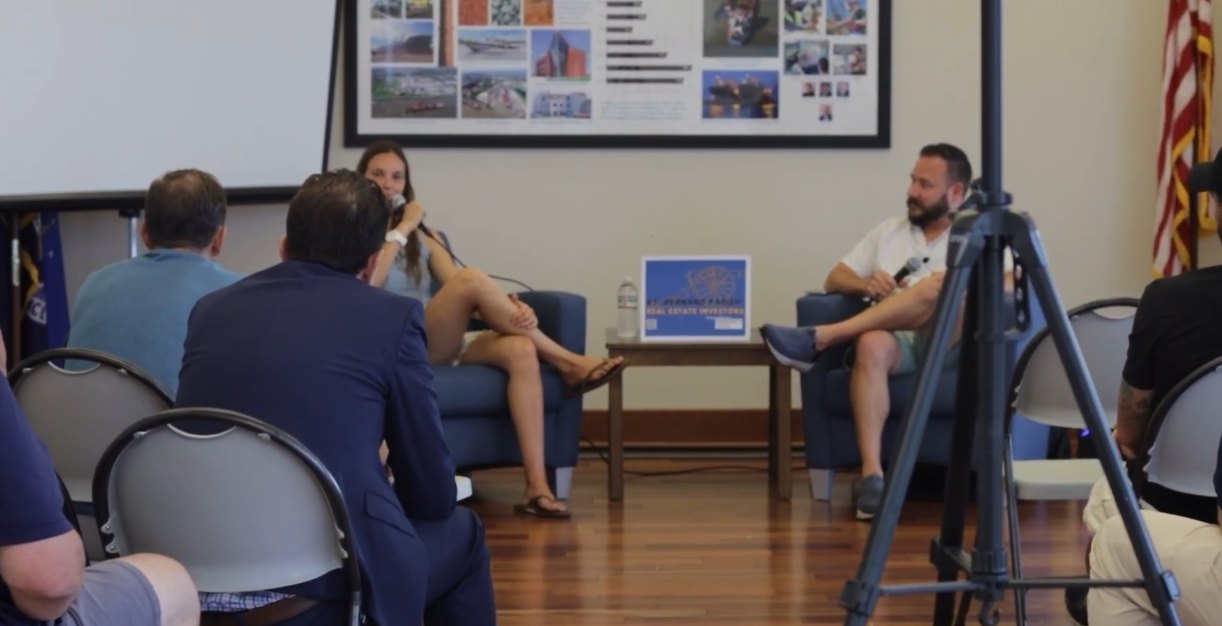
At our June 2025 meetup, I asked her how she built that business from a distance, how she picks contractors, and how she’s adjusting to a tougher market. Her answers apply to anyone renovating houses in St. Bernard, whether you live down the street or across the country.
From high school to wholesaling to flipping
Dominique got interested in real estate at 16, when her mom bought her first house: a short-sale fixer-upper in 2012, right after the crash. Watching that renovation was enough. She skipped college, got her real estate license after high school, and spent a few years learning sales as an agent.
Then she wholesaled about 40 deals in California. She walked job sites with her buyers and picked their brains until she felt ready to do her own deals. But at 21, Los Angeles houses cost $500,000 to $700,000, and she didn’t want one bad deal to knock her out of the game.
I like this part of her story because it wasn’t overnight. Agent, then wholesaler, then flipper, and only in the last few years has she started holding rentals.
Why New Orleans?
Her dad’s family lives in Harvey, on the West Bank. That was the deciding factor. She wanted an affordable market where she had at least one person on the ground who could show her around and answer simple questions, like whether they knew a good plumber or a real estate agent.
She knew building a team would be the hardest part of investing from far away, so she picked the market where she had a head start meeting people.
How she runs it from a distance
I expected a list of apps. Dominique said her setup is pretty simple. The team is the system.
- Three crews, three people to call. Each crew is run by a general contractor. There might be 30 people on her job sites, but she deals with three. She pays a premium for that, and she says it’s worth it.
- One or two project managers on the ground. They put up lockboxes and signs, take photos and videos, check on construction and send her updates.
- Local partners. Title companies, lenders, agents and wholesalers fill in the rest.
It took about six years to build, and plenty of people cycled through along the way. Her favorite thing about investing out of state is that it forces her to delegate. She told a story about planting landscaping herself before a listing and asking why she didn’t just pay someone $100 to do it.
When she’s in town, she spends her time with people, not tools: coffee, lunches and meetings with her crews and the people who bring her deals.
What she looks for in a contractor
Two things: communication and stable pricing.
Her best contractors talk to her three to five times a day. The ones she’s let go were hard to get on the phone. On pricing, she’s seen contractors bid low to win the work, then raise prices two or three jobs later.
She used to give most of her work to one crew out of loyalty. She now calls that one of her worst decisions, because she lost touch with what realistic pricing looked like. Spreading work across several crews keeps everyone honest and gives her backups if someone gets hurt or retires.
Flip it or keep it?
She renovates every property like a flip. If it pencils as a rental, meaning she can refinance, pull out nearly all of her money and still cash flow a couple hundred dollars a door, she keeps it. If not, she sells. That works out to about two to five rentals a year.
How her buy box has changed
Today she buys single-family homes in the greater New Orleans area with resale values under $500,000, mostly in Jefferson Parish.
For her first three years, she never sold a house for more than $200,000. Her first purchase was about $50,000. Around 2023, as rates and insurance went up, entry-level buyers started backing out a week before closing, even after appraisal and inspection. So she moved up to houses that attracted more qualified buyers.
Now she’s seeing buyers lean back toward $300,000 to $350,000 homes that need cosmetic work, instead of a fully finished $450,000 house. She keeps adjusting rather than deciding flipping doesn’t work anymore.
Her advice for investors right now
Know what market you’re in. In 2021 and 2022, she said, she could do everything wrong and still make money on a flip. Now she can do everything right and lose money. If a deal goes bad, it may not be your fault.
Scale slowly. Don’t buy 10 flips at once in a market like this unless you have strong reserves, experience or a seasoned partner.
Use volume to spread risk. Once you’re ready, more deals means one loser doesn’t sink you. Not every house has to be a home run.
Underwrite at the low end. If similar homes sell for $300,000 to $325,000, she plans to list at $280,000 and runs her numbers that way from the start. She isn’t counting on the market to bail her out.
Pick markets by people, not just data. Her first question is where she has an edge in meeting people. Second is a city big enough for steady deal flow. Population and job data come after that.
Thinking about flipping or investing in St. Bernard? Our agents work with investors every week, and our builders can help you estimate repairs before you buy. Call Arpent Realty at 504-356-3897.
Common questions
Can you flip houses in New Orleans without living there?
Dominique Gunderson does. She relies on three general contractors who run her crews, one or two project managers on the ground, and local title companies, lenders and agents.
What should you look for in a contractor for a flip?
Dominique looks for frequent communication and stable pricing, and she spreads work across several crews so pricing stays realistic.
How do you decide whether to flip a house or keep it as a rental?
She keeps a property if she can refinance, pull out nearly all of her money and still cash flow a couple hundred dollars a month per unit. Otherwise she sells it.
How should investors underwrite flips in a slow market?
Dominique plans her resale price at the low end of recent comparable sales. If similar homes sold for $300,000 to $325,000, she runs her numbers at $280,000.
Thank you to the St. Bernard Economic Development Foundation for partnering with us. Join the St Bernard Parish Real Estate Investors Facebook group for upcoming meetups, and watch past interviews on YouTube. Also read our recaps of the Katrina investor panel and the St. Bernard leadership panel.
This recap is for general information and is not investment advice.